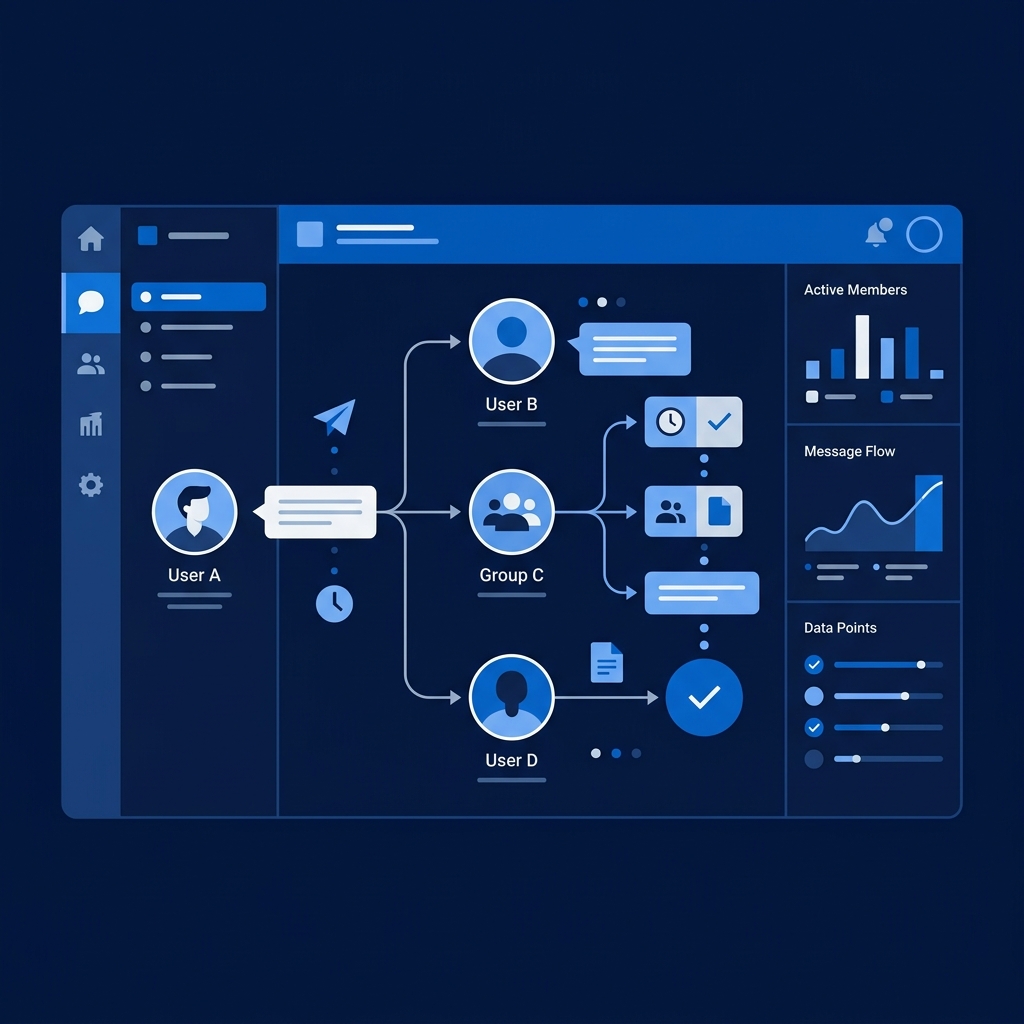
When most people think of an AI chatbot, they picture a simple input box: you type a prompt, it hits an OpenAI API, and text streams back.
If you are an engineer tasked with building a chatbot for an enterprise, you quickly realize that simple model is entirely insufficient. A production-grade AI system is not just an API call; it is a complex, multi-layered architecture designed for security, latency, and context management.
The Big Picture: The 4 Layers of AI Architecture
An enterprise AI chatbot is typically divided into four distinct layers:
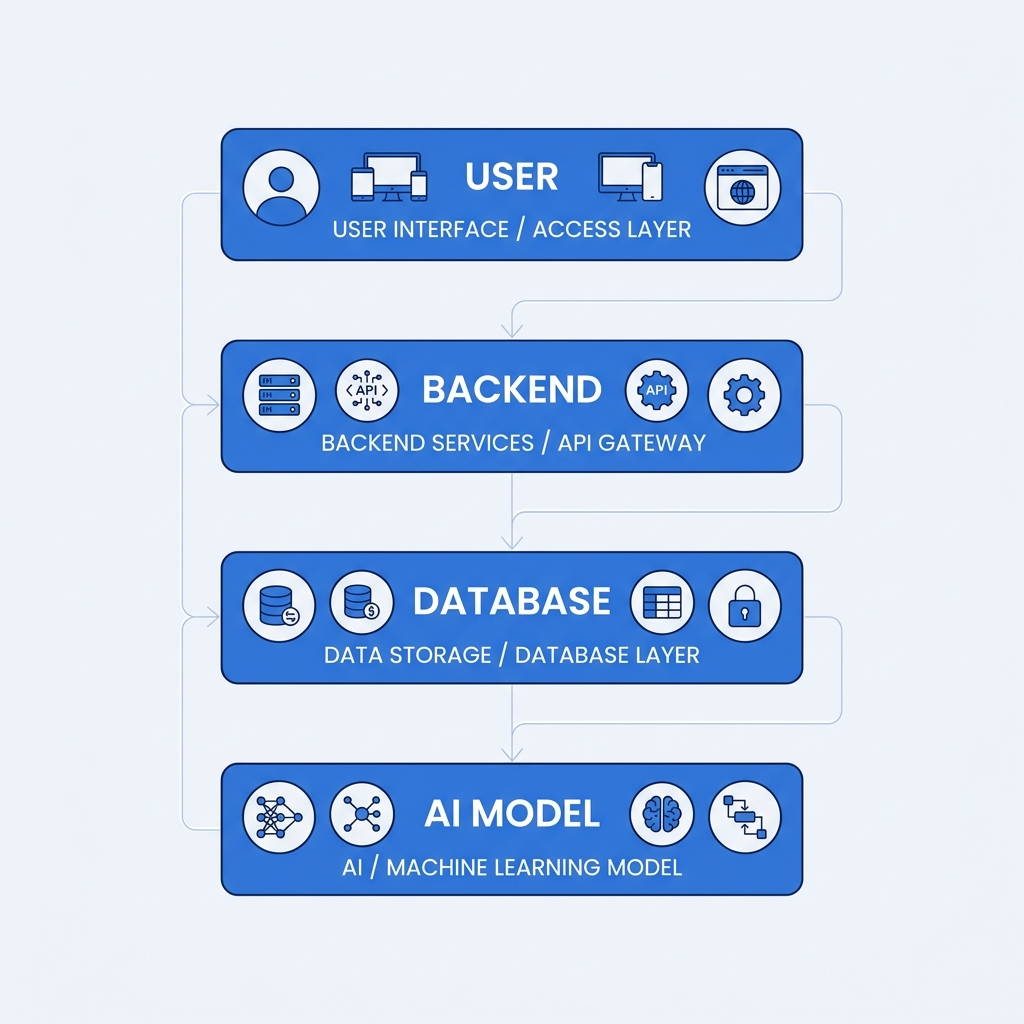
- The Client Layer (Frontend): Where the user interacts (Web app, Mobile app, or chat interface).
- The Orchestration Layer (Backend): The "brain" of the system that manages business logic, routing, security, guardrails, and context.
- The Data Layer (Memory): Where your private company data, vector search databases, SQL datasets, and document indices are stored.
- The Model Layer (LLM): The intelligence engine (external APIs like OpenAI/Anthropic, or self-hosted models like Llama 3).
Step-by-Step: The Lifecycle of a Single Request
Let's trace a single user query—"What is the status of project Alpha?"—through this architecture.
The user inputs the query. The frontend sends an HTTP POST request or WebSocket connection to the backend server instead of calling the LLM directly, protecting API credentials.
The backend intercepts the request, running authentication (role checks) and guardrails to filter prompt injections or sensitive topics before processing.
The query is converted into an embedding. The backend searches the Vector DB (e.g. Pinecone) to fetch context document chunks related to Project Alpha.
The backend builds the final payload by combining the system prompt instructions, retrieved context chunks, Redis chat history, and user question.
The backend sends the complete prompt payload to the LLM model via an API call.
The LLM generates text. The backend streams tokens back to the client in real-time via Server-Sent Events (SSE) for a smooth typing effect.
The Complexity of Context Management
If you look at this flow, you will realize that the LLM is actually the simplest part of the architecture. It is just a black box that takes text in and spits text out.
The real engineering challenge is Context Management happening in the Orchestration Layer. Engineers spend most of their time optimizing:
- Latency: How do we make the vector search faster so the LLM can start streaming sooner?
- Relevance: How do we chunk our documents so the vector database returns the right Jira ticket, not a ticket from three years ago?
- Memory Management: How do we handle chat histories that exceed the LLM's token limit? (Usually by summarizing past messages before injecting them into the prompt).
🚀 Ground Your AI with SetuLytix
SetuLytix takes care of the orchestration backend, data synchronization, and security guardrails out of the box.
Book a Demo