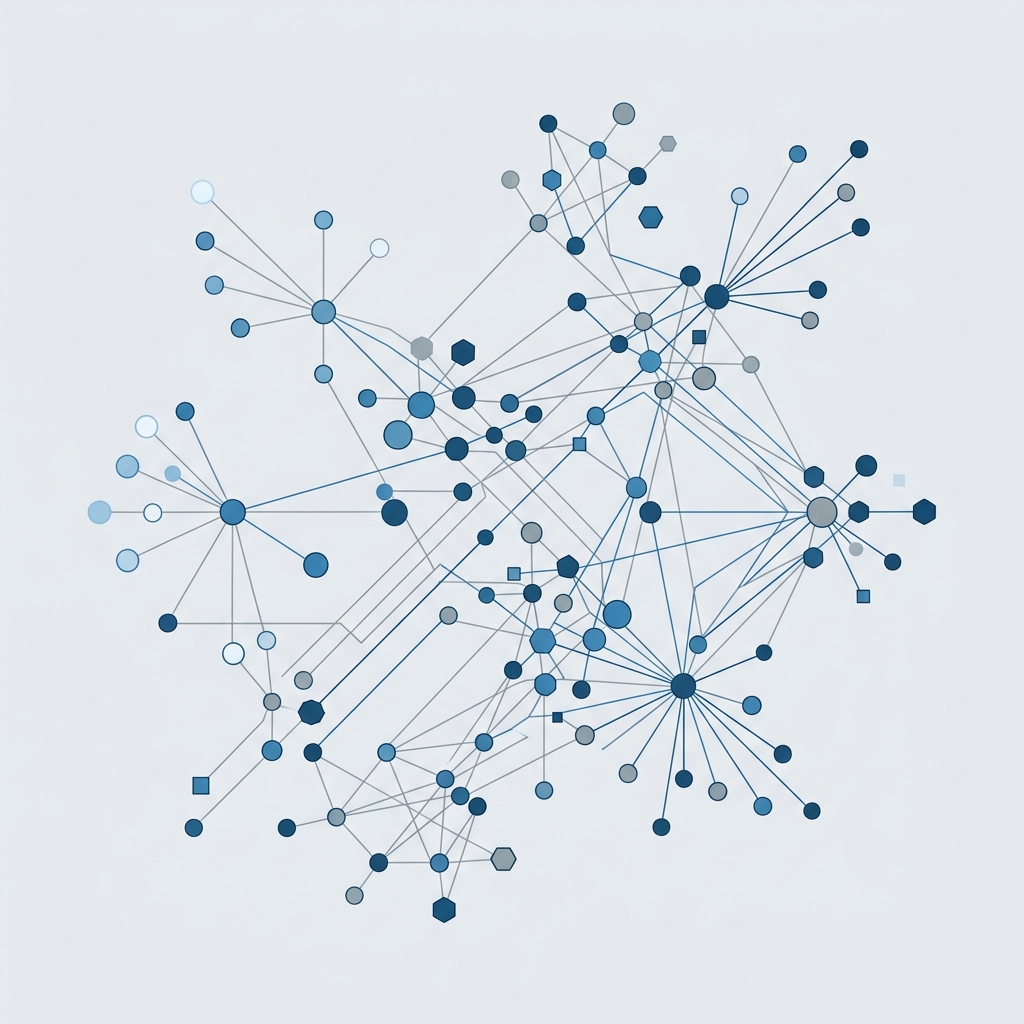
When you read the word "apple", your brain instantly conjures up concepts: a crisp fruit, a red or green color, an autumn harvest, or perhaps a trillion-dollar technology company.
But to a computer, "apple" is just a sequence of characters: a-p-p-l-e. It has no intrinsic meaning. Traditionally, computers matched words literally. If you searched for "remote work guidelines" and a document used the phrase "telecommuting policy," the computer would see no overlap and fail to find the document.
From Words to Numbers: The Language Barrier
Keyword search has dominated software for decades. It is incredibly fast but fundamentally fragile. Literal matching misses synonyms, ignores intent, and fails when users make typos or phrase queries naturally.
For an AI chatbot to serve as a reliable business assistant, it must understand context. It needs to know that a user asking "How do I access my payslip?" is seeking the same information as a document titled "Employee Payroll Portal Instructions." Embeddings provide this bridge by mapping meaning instead of characters.
What is a Vector Embedding?
At its simplest, a vector embedding is a list of numbers (a vector) generated by a specialized machine learning model. This list of numbers acts as a mathematical coordinate mapping the text into a high-dimensional "semantic space."
Think of it like a GPS coordinate. A GPS coordinate uses two numbers (latitude and longitude) to pin down a physical location on Earth. Similarly, an embedding model uses hundreds or thousands of numbers to pin down a conceptual location in the landscape of human meaning.
The Multi-Dimensional Semantic Space
In a simplified 3D semantic space, we can map out concepts as spatial coordinates. Words that share meanings or contexts are placed close to each other, while unrelated concepts are mapped far apart.
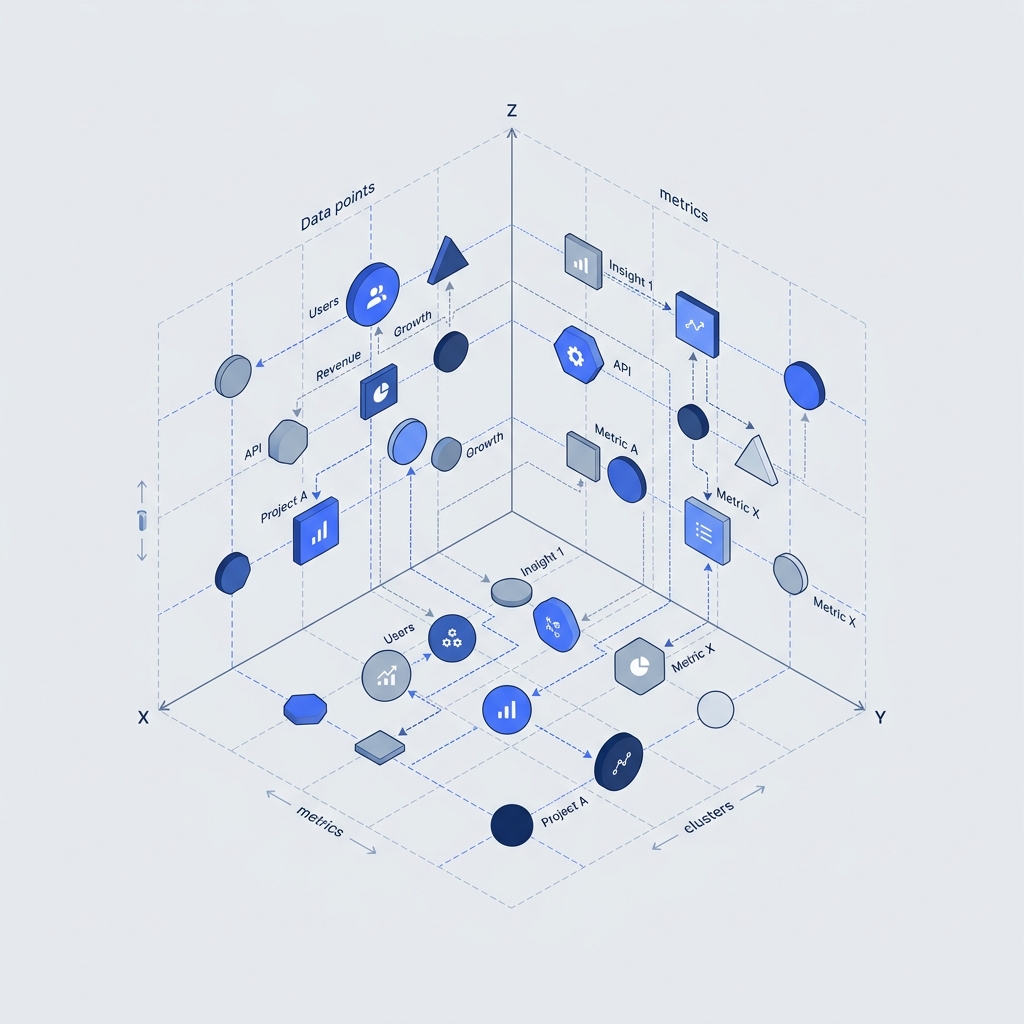
Because embeddings are mathematical vectors, we can perform vector arithmetic on them. A classic example in NLP is:
By subtracting the vector for "Man" from "King", the model removes the concept of masculinity. By adding "Woman", it injects femininity. The nearest point in the vector space to this mathematical result is the coordinate for "Queen".
While a 3D grid is easy to visualize, production embedding models (like OpenAI's text-embedding-3-small or Cohere's Embed models) use 768, 1536, or even more dimensions. This allows them to capture highly subtle dimensions of human language including tone, domain-specific terminology, and context.
Inside the Embedding Generation Pipeline
How does text transform into a high-dimensional coordinate? The process follows a structured pipeline:
The input text is split into smaller units called tokens (words or parts of words).
The tokens are passed through a deep learning transformer model trained on massive text corpora.
The model outputs a fixed-length array of floating-point numbers (e.g. 1536 floats) representing the text's semantic profile.
The vector is stored in a vector database (like Pinecone or Qdrant) with an index to support similarity searches in milliseconds.
Keyword Search vs. Semantic Search
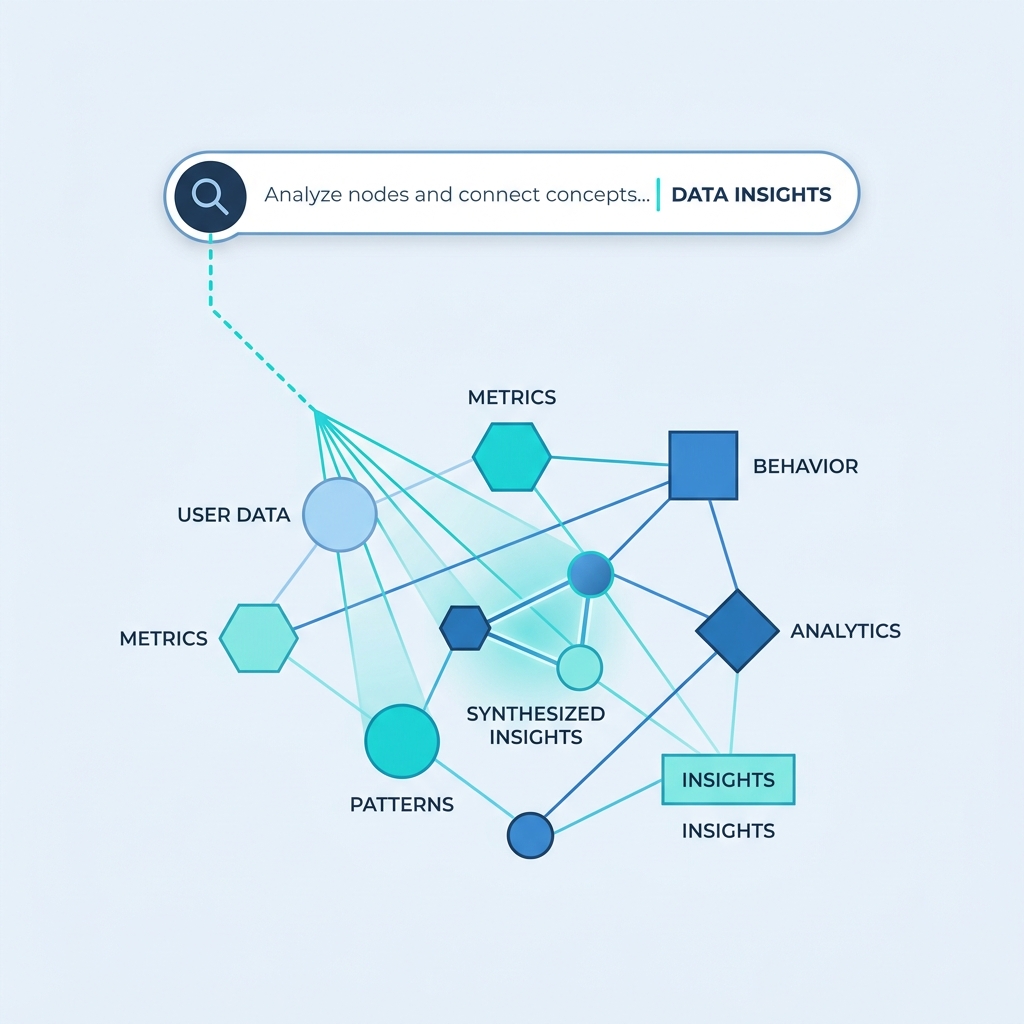
To understand why enterprise AI depends on vector embeddings, let's compare keyword-matching with semantic similarity search:
| Feature | Keyword Search | Semantic Search (Embeddings) |
|---|---|---|
| Matching Logic | Exact character-by-character string matches. | Mathematical proximity of meaning in vector space. |
| Synonyms | Misses them completely unless hardcoded. | Handles them automatically (maps "feline" near "cat"). |
| Intent Detection | Ignores context; matches literal keywords only. | Captures overall context and user intent. |
| Typo Tolerance | Low. Mispelled keywords return zero matches. | High. Typo vectors still map close to the correct concepts. |
Why Embeddings Power RAG and AI Agents
Without vector embeddings, retrieval-augmented systems like RAG could not exist. When you ask a RAG chatbot a question, the system uses embeddings behind the scenes:
- It converts your question into a query vector using the same embedding model.
- It searches the vector database using similarity metrics (like Cosine Similarity) to find text chunks with the closest coordinates.
- It passes those highly relevant context chunks to the LLM, ensuring the answer is fully grounded on your private data.
Similarly, for autonomous AI Agents, embeddings act as a filter. They help the agent recall memories of past actions, search historical chat threads, and select the correct API tool based on the user's natural language request.
🚀 Ground Your AI with SetuLytix
SetuLytix automates document chunking and vector embedding generation to ground your AI agents on verified business data.
Book a Demo